

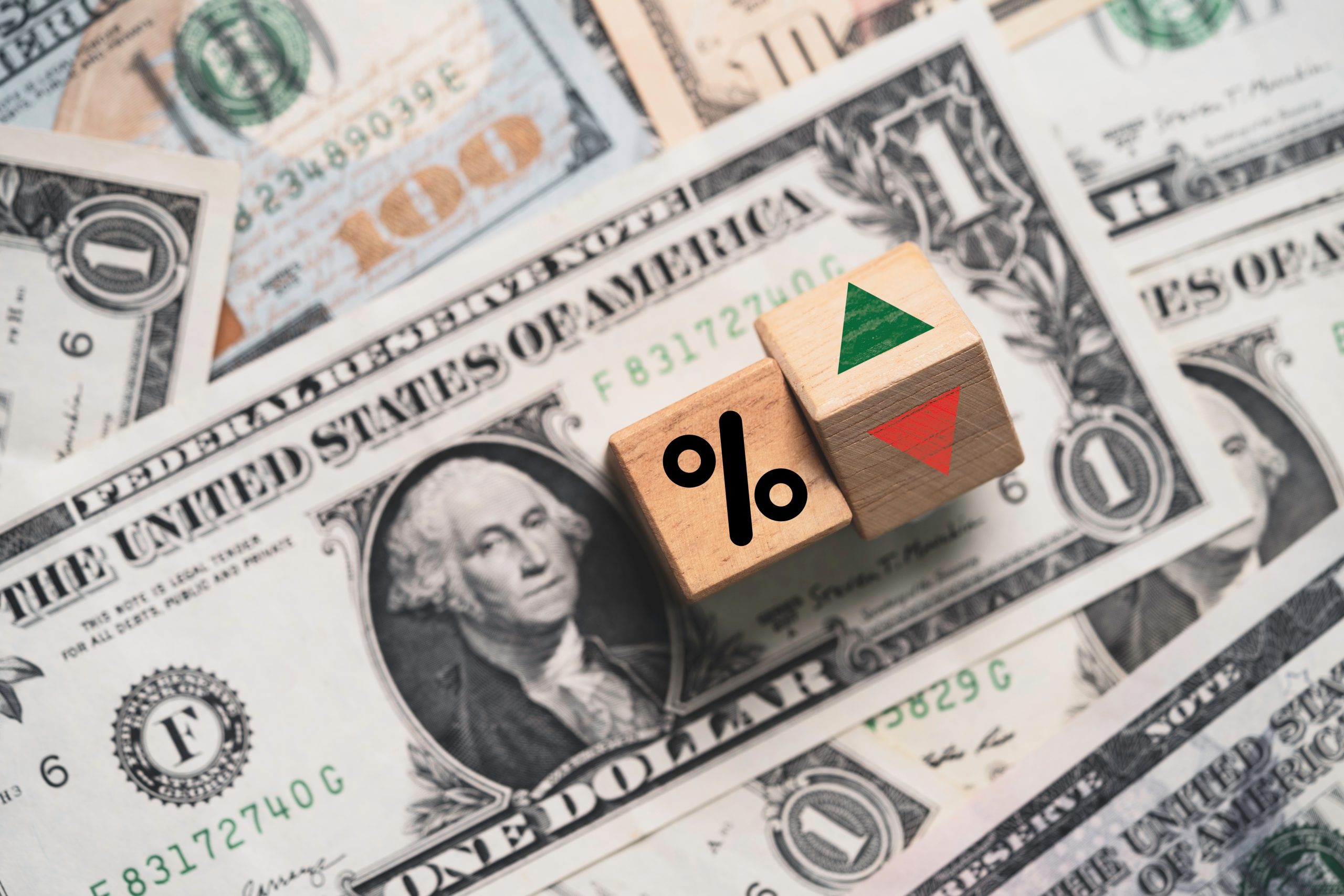
In its September 2025 meeting, the Federal Reserve made its first rate cut in the current cycle, lowering the federal funds target by 25 basis points, with market expectations pricing in another two cuts by year end. This move signals a shift from a hawkish posture to a more accommodating one, as macro growth softens and labor markets show signs of weakening.
What this shift may catalyze in commercial real estate, and specifically in sectors we target such as multifamily, self-storage, and car wash, is significant. Below we analyze the implications and why we view this as a favorable inflection point for our portfolio.
Interest Rate Cuts, Cap Rates, and Asset Valuation
The most direct channel through which a rate cut benefits real estate is via lower discount rates and borrowing costs. In private markets, rate cuts tend to (1) reduce the cost of debt, (2) support higher valuations via lower required yields, and (3) make transaction economics more attractive.
In commercial real estate, the typical valuation formula is:
Value = Net Operating Income / Cap Rate
When interest rates fall, the yield curve and treasury rates decline, which tends to compress cap rates, meaning buyers are willing to accept a lower return. That in turn lifts valuations for a given level of NOI. In other words, a 25 bps to 50 bps decline in cap rates can translate into meaningful upward revaluation on stabilized assets.
Because multifamily and self-storage tend to be relatively stable, cash flowing sectors, they are among the first to feel that value uplift from cap rate compression. As debt becomes cheaper, the spread between cap rates and financing rates narrows, which encourages additive leverage or even recapitalizations.
It is worth noting that cap rate compression is rarely one for one with the cut in interest rates. Market psychology, risk premiums, and sector or asset risk play an outsized role in how much of that benefit is realized. But historically, rate easing cycles have been correlated with multiple hundreds of basis point downward drift in cap rates, especially in less volatile segments.
Thus, from a portfolio perspective, the recent Fed move could unlock latent value in our existing assets, even without major operational improvements, simply by changing the valuation environment.
Multifamily & Self Storage: Resilience and Upside
Multifamily benefits from stable demand drivers such as population growth, household formation, and limited new supply in many markets. In 2025, many multifamily markets are seeing improving occupancy and rent growth trending higher.
With lower interest rates, new acquisition underwriting becomes more aggressive. Buyers can assume lower debt service costs and higher leverage, making bids that were previously marginal more compelling. The result is increased competition for high quality multifamily properties, narrowing spreads over treasuries and putting downward pressure on cap rates in that sector.
Self-storage has demonstrated strong resilience through economic cycles because it often acts as a defensive or recession hedge asset. Occupancy and rental rates adjust more flexibly than many real estate sectors. When rates decline and broader real estate becomes more investible, storage tends to be perceived as a stable core plus asset with upside optionality.
In a lower rate environment, storage assets with stable cash flows may begin to trade more aggressively. Also, the spread between financing costs and stabilized yields tends to widen, providing room for more yield enhancing capital structures or value creation strategies such as expansions, densification, or ancillary income streams.
Given our exposure to those sectors, we see the rate cut as a positive tailwind for both revaluation and new investment opportunities.
Private Equity & Transaction Volume Dynamics
One challenge over the last few years has been subdued transaction activity in many sectors of private markets, especially real assets and traditional private equity. Many potential buyers stayed sidelined, waiting for rate normalization. Indeed, CRE transaction volumes have been weak amid elevated interest rates and tight underwriting.
Yet despite that lull, private markets are showing signs of life. For example, Blackstone and other large investors have increased deployable capital in anticipation of rate cuts. Furthermore, private equity exits in Q2 2025 reached a three year high, with $308 billion in announced exits in the first half, including many long-held assets.
In the Partners Group “Private Markets Spotlight,” analysts describe a threefold benefit from rate cuts: lower borrowing costs, boosted valuations, and more attractive deal economics, each of which should stimulate transaction volume.
We expect that the private equity universe will respond to this rate environment by increasing deal flow beyond just the AI or technology verticals, which had held up better through the tightening cycle. As more capital chases yield, more traditional asset classes may see renewed interest.
Implications for Our Car Wash Portfolio
While car washes are an unusual niche relative to core real estate, they are not immune to macro trends. In fact, they are micro businesses with real estate
and infrastructure components, and they often rely on private capital flows and leveraged acquisitions.
If interest rates fall further, acquisition financing for businesses becomes more appealing. Lower borrowing costs improve projected cash flows and increase the pool of buyers able to underwrite deals in sectors like car wash. That can feed increased merger and acquisition activity in that space.
Moreover, car washes frequently have ancillary real estate optionality such as adjacent land, repurposing, or drive thru enhancements. A lower capital cost regime can enable more aggressive capital expenditures or bolt on acquisitions that were previously less viable.
Therefore, we see potential tailwinds for our car wash portfolio both from revaluation of the real estate component and from improved transaction liquidity in the underlying business sector.
Risks and Caveats
There are several risks to consider as we evaluate the impact of lower rates. The full effects on capital markets and valuations often lag and depend heavily on investor sentiment. Even with rate relief, lenders may remain cautious in CRE, particularly for smaller or more leveraged deals. If rate cuts are a response to deeper economic weakness, softer rent growth or higher vacancies could offset valuation gains. Cap rate compression also tends to favor stabilized, lower risk assets first, which means riskier or more unique properties may not see the same benefit. Finally, there is the risk of valuation froth, where pricing gets ahead of fundamentals, which could set up future downside if the cycle turns again.
Strategic Positioning and Outlook
In light of this changing environment, our strategy will continue to focus on anchoring core assets in multifamily and self-storage, which are most likely to benefit from cap rate tightening and valuation uplift. We will also look at select opportunistic redeployments, evaluating acquisitions or recapitalizations where the spread between projected yield and borrowing costs is attractive. Our business-driven real assets, such as car washes, should benefit from increased acquisition activity, and we plan to leverage this momentum to enhance portfolio value.
We are also preparing assets for eventual exits, ensuring that when transaction markets open more broadly we can move quickly to monetize at favorable points. Debt will be used carefully, as lower rates provide more flexibility but should not encourage overextension. Importantly, we will also be selectively exiting certain assets that no longer make sense to hold or that require more capital than we believe is prudent for the long term.
Overall, we see the Fed’s rate decrease as a potential catalyst for renewed strength in real assets. Our multifamily and self-storage holdings may see valuation upside, and our car wash businesses may benefit from improved transaction volume. We intend to take a balanced approach, pursuing opportunities created by this environment while maintaining discipline against downside risks.
